
When working with demanding materials in corrosive or high-stress environments, selecting the right filler metal is not just a choice—it’s a critical engineering decision. For welding 12% chromium martensitic stainless steels, the E410NiMo (often classified as ER410NiMo) welding electrode stands out as a specialized and robust solution.
E410NiMo Stainless Steel Electrode
Whether you’re a welding engineer, a project manager, or a skilled fabricator, understanding the capabilities of this electrode can unlock greater durability and performance in your projects. Let’s dive into the key features that make E410NiMo an essential tool in the metallurgical toolkit.
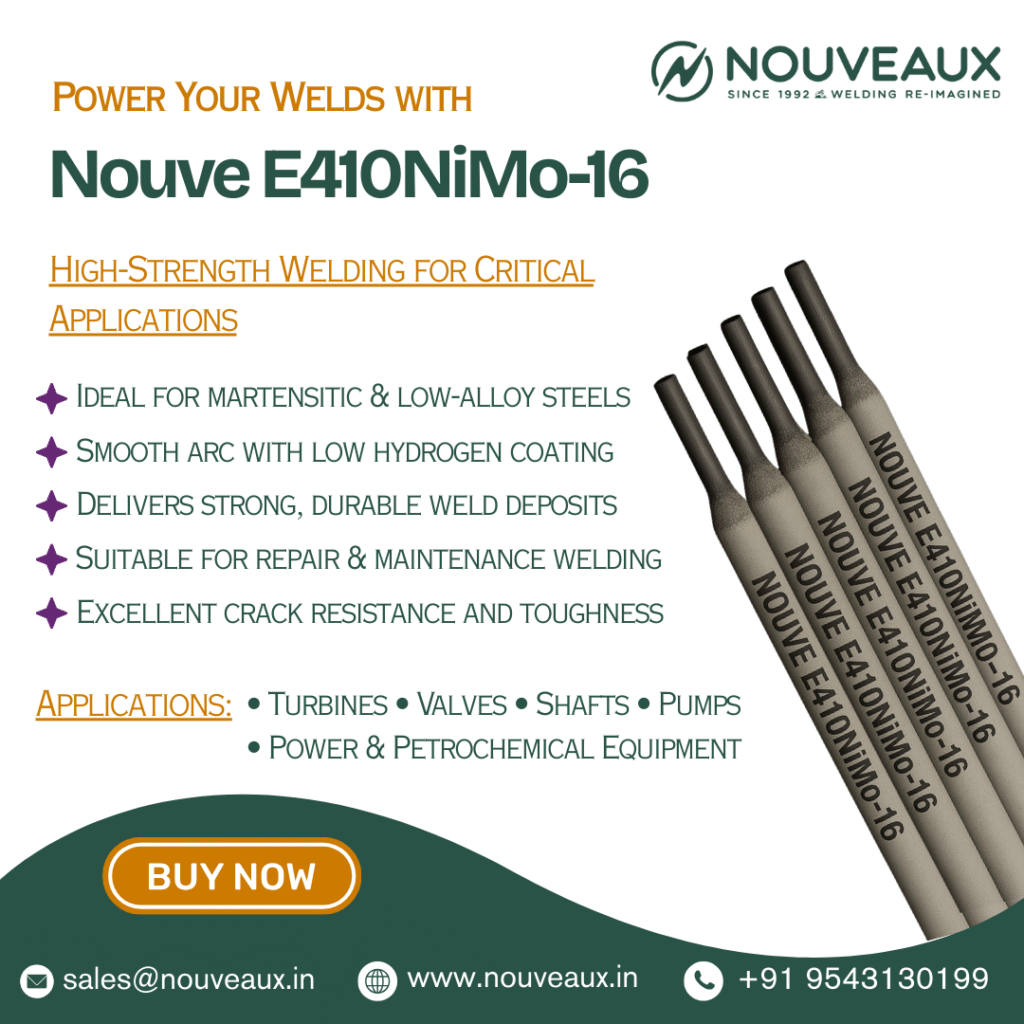
1. Designed for Martensitic Stainless Steels
The primary application of E410NiMo is welding CA6NM (ASTM A743/CA6NM) cast stainless steel and similar 12-13% chromium martensitic grades. These materials are prized for their combination of corrosion resistance and high strength, commonly used in:
- Hydro turbine components
- Valves, pumps, and fittings in the oil & gas industry
- Fasteners and components requiring good mechanical properties
2. Optimized Chemical Composition for Toughness
The “NiMo” in its name is the clue to its enhanced formula. Compared to a basic E410 electrode, E410NiMo features:
- Higher Nickel (Ni) Content (~4-5%): This crucial addition reduces the hardness of the martensitic weld metal, significantly improving its ductility and toughness. It helps mitigate the risk of cold cracking.
- Molybdenum (Mo) Addition (~0.5%): Enhances corrosion resistance, particularly against pitting and crevice corrosion, and increases strength at elevated temperatures.
This balanced chemistry results in a weld deposit that is strong yet forgiving, a vital trait for components under dynamic loads.
E410NiMo Stainless Steel Electrode
3. Excellent Crack Resistance
Welding high-chromium martensitic steels can be challenging due to the formation of a hard, brittle martensite structure upon cooling. E410NiMo is specifically formulated to combat this:
- Its nickel content ensures a softer, more tempered martensitic structure.
- It is less susceptible to hydrogen-induced cracking (HIC) when proper low-hydrogen welding practices are followed (e.g., electrode baking, clean base metal).
4. Post-Weld Heat Treatment (PWHT) Flexibility
While E410NiMo weldments respond well to PWHT (tempering) for optimal properties, a key advantage is that they can often be used in the as-welded condition for many applications. This is due to their inherent toughness. When PWHT is performed, it effectively tempers the martensite, relieving stresses and further enhancing ductility.
5. Good Corrosion & Erosion Resistance
The weld metal offers corrosion resistance comparable to the CA6NM base metal it’s designed for. It performs well in:
- Mildly corrosive environments (e.g., freshwater, atmospheric conditions)
- Situations involving cavitation erosion and slurry erosion, making it a top choice for hydro turbines and slurry pumps.
6. Balanced Mechanical Properties
E410NiMo deposits deliver a reliable combination of:
- High tensile strength (typically > 760 MPa / 110 ksi)
- Good yield strength
- Improved elongation and impact toughness (especially when compared to standard 410 welds)
E410NiMo Stainless Steel Electrode
Best Practices for Using E410NiMo Electrodes
To leverage these features effectively, adhere to these guidelines:
- Preheat & Interpass Temperature: A preheat of 200-300°C (400-600°F) is typically recommended for thicker sections to slow the cooling rate and reduce cracking risk.
- Strict Low-Hydrogen Practice: Store electrodes in a sealed oven at 120-150°C (250-300°F). Use a holding oven at the job site and bake if exposed to moisture.
- Heat Input Control: Use a moderate heat input. Too low can increase hardness; too high can cause excessive distortion.
- Post-Weld Tempering: For critical applications, a tempering cycle at 580-620°C (1075-1150°F) followed by controlled cooling is standard to maximize toughness and stress relief.
Applications at a Glance
- Power Generation: Runners, blades, and casings in hydroelectric turbines.
- Oil & Gas: Wellhead components, Christmas tree valves, pump casings.
- Marine & Aerospace: High-strength corrosion-resistant fittings and components.
E410NiMo Stainless Steel Electrode
Conclusion: The Strategic Choice for Demanding Joins
The E410NiMo stainless steel welding electrode is more than just a consumable; it’s a precision-engineered solution for one of welding’s tougher challenges. Its enhanced nickel-molybdenum chemistry transforms the brittle nature of as-welded martensite into a tough, crack-resistant, and durable joint.
By choosing E410NiMo and following prescribed welding procedures, fabricators ensure that critical components can withstand the triple threat of stress, corrosion, and impact throughout their service life. In the world of specialized welding, it’s the details in the electrode that build the integrity of the final structure.