
In the demanding world of industrial manufacturing and repair, the choice of welding filler metal isn’t just a detail—it’s a critical decision that determines the longevity, safety, and performance of the final component. Among the elite performers in the niche of high-nickel alloys, T-NiCr-3 stands out.
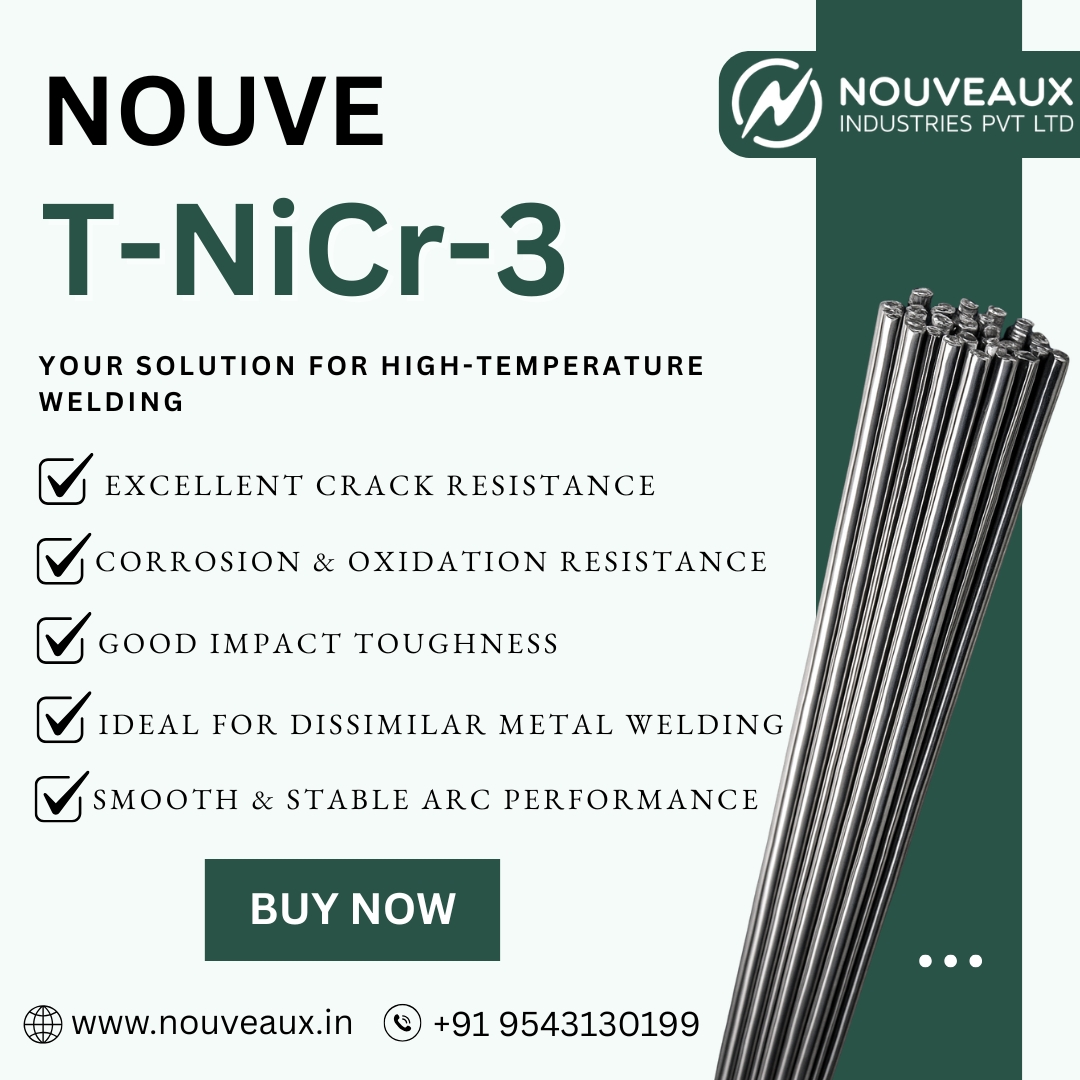
But what makes this specific TIG rod so special, and where is it indispensable? This deep dive explores the top industrial applications of T-NiCr-3, showcasing why it’s a cornerstone material for engineers and welders tackling the toughest environments.
First, what is T-NiCr-3?
T-NiCr-3 is a nickel-chromium-based TIG (GTAW) filler metal conforming to standards like AWS A5.14 ERNiCr-3. Its primary composition includes:
- Nickel (Ni): Provides excellent toughness and resistance to corrosion and thermal expansion.
- Chromium (Cr): Enhances resistance to high-temperature oxidation and corrosion.
- Additions of Niobium (Nb): This is the key! Niobium acts as a stabilizer, drastically reducing the risk of cracking in the weld zone, a common issue when joining dissimilar metals or certain corrosive-service materials.
This unique blend of properties makes T-NiCr-3 exceptionally versatile for joining a range of base metals, most notably INCONEL® Alloy 600 and various stainless steels.
Top 5 Industrial Applications of T-NiCr-3
1. Aerospace and Jet Engine Components
The aerospace industry operates at the extremes of temperature and stress. T-NiCr-3 is a trusted solution for manufacturing and repairing critical components within jet engines and airframes.
- Applications: Combustion cans, turbine shrouds, exhaust systems, and afterburner components.
- Why T-NiCr-3? Its superior strength and oxidation resistance at temperatures up to 2000°F (1100°C) are paramount. It ensures the weld maintains integrity under relentless thermal cycling and high mechanical loads, which is non-negotiable for flight safety.
2. Chemical and Petrochemical Processing
Chemical plants are battlegrounds of corrosion, dealing with caustic solvents, acids, and high-pressure environments. Equipment failure here can be catastrophic.
- Applications: Reactors, heat exchangers, distillation columns, piping systems, and valves handling corrosive media.
- Why T-NiCr-3? It offers outstanding resistance to a wide range of corrosive agents, including caustic soda and various organic and inorganic compounds. Its ability to be used for both similar and dissimilar metal welding (e.g., joining nickel alloys to stainless steel) makes it invaluable for complex plant fabrication and maintenance.
3. Power Generation (Nuclear & Fossil Fuel)
Whether it’s a traditional coal-fired plant or a advanced nuclear reactor, power generation equipment demands materials that can perform under pressure, heat, and in some cases, intense radiation.
- Applications: Steam generator tubing, boiler feedwater heaters, reactor control rod drive mechanisms, and high-temperature piping.
- Why T-NiCr-3? In nuclear applications, its stability and resistance to corrosion in high-purity water are critical. In fossil fuel plants, it withstands the corrosive combustion byproducts and high-pressure steam. Its niobium content prevents “weld decay” (sensitization) in the heat-affected zone, a common failure point.
4. Pollution Control and Scrubber Systems
Modern industrial facilities are equipped with sophisticated scrubbers and pollution control units to meet environmental standards. These systems are constantly exposed to highly corrosive flue gases and acidic condensates.
- Applications: Ductwork, fan housings, scrubber vessels, and stack liners in coal-fired plants, waste incinerators, and metal refining facilities.
- Why T-NiCr-3? The alloy provides robust resistance to sulfuric, hydrochloric, and other acids formed in these processes. Welding with T-NiCr-3 ensures the entire structure, not just the base metal, can survive this harsh environment for years.
5. Heat Treating and Industrial Furnace Equipment
From annealing steel to processing ceramics, industrial furnaces create some of the most consistently hostile environments for metals.
- Applications: Radiant tubes, muffles, retorts, furnace rolls, and fixture baskets.
- Why T-NiCr-3? This filler metal excels in resisting “carburization” (carbon absorption) and oxidation. When components in a carburizing atmosphere are welded with T-NiCr-3, the weld joint resists becoming brittle and cracking, thereby extending the service life of expensive furnace fixtures.
Key Advantages at a Glance
- Versatile Joining: Excellent for welding INCONEL 600 to itself, to other nickel alloys, and to various stainless steels.
- Crack Resistance: The niobium stabilization is a game-changer for preventing microfissuring and hot cracking.
- High-Temperature Prowess: Maintains strength and resists scaling and oxidation in continuous high-heat service.
- Corrosion Champion: A reliable choice for both oxidizing and reducing chemical environments.
Best Practices for Welding with T-NiCr-3
To get the most out of this premium filler metal, follow these guidelines:
- Cleanliness is Critical: All base metal and filler metal surfaces must be free of oil, grease, paint, and moisture. Use a dedicated stainless steel wire brush.
- Control Heat Input: Use the lowest possible heat input that gives good fusion to avoid excessive dilution and segregation of elements.
- Shielding Gas: Ensure an excellent argon (or argon/helium) gas shield. Trailing shields are often recommended for critical applications to protect the cooling weld bead from oxidation.
- Stringer Beads: Weave patterns can increase heat input; using stringer beads is generally preferred for better control and weld properties.
Conclusion
T-NiCr-3 is far more than just a welding wire; it’s an engineering solution for some of industry’s most daunting challenges. From the skies to the sea, from chemical plants to power stations, its unique properties ensure integrity where failure is not an option.
By understanding its applications and advantages, you can specify and use T-NiCr-3 with confidence, building and repairing equipment that is safer, more durable, and more reliable.