
Selecting the correct MIG wire is one of the most important factors in achieving strong, durable, and high-quality welds in industrial applications. Different industries require different welding solutions depending on the base material, welding position, strength requirements, and working environment. This is why industries prefer sourcing products from a reliable MIG Wire Manufacturer to ensure consistent welding performance and long-lasting results.
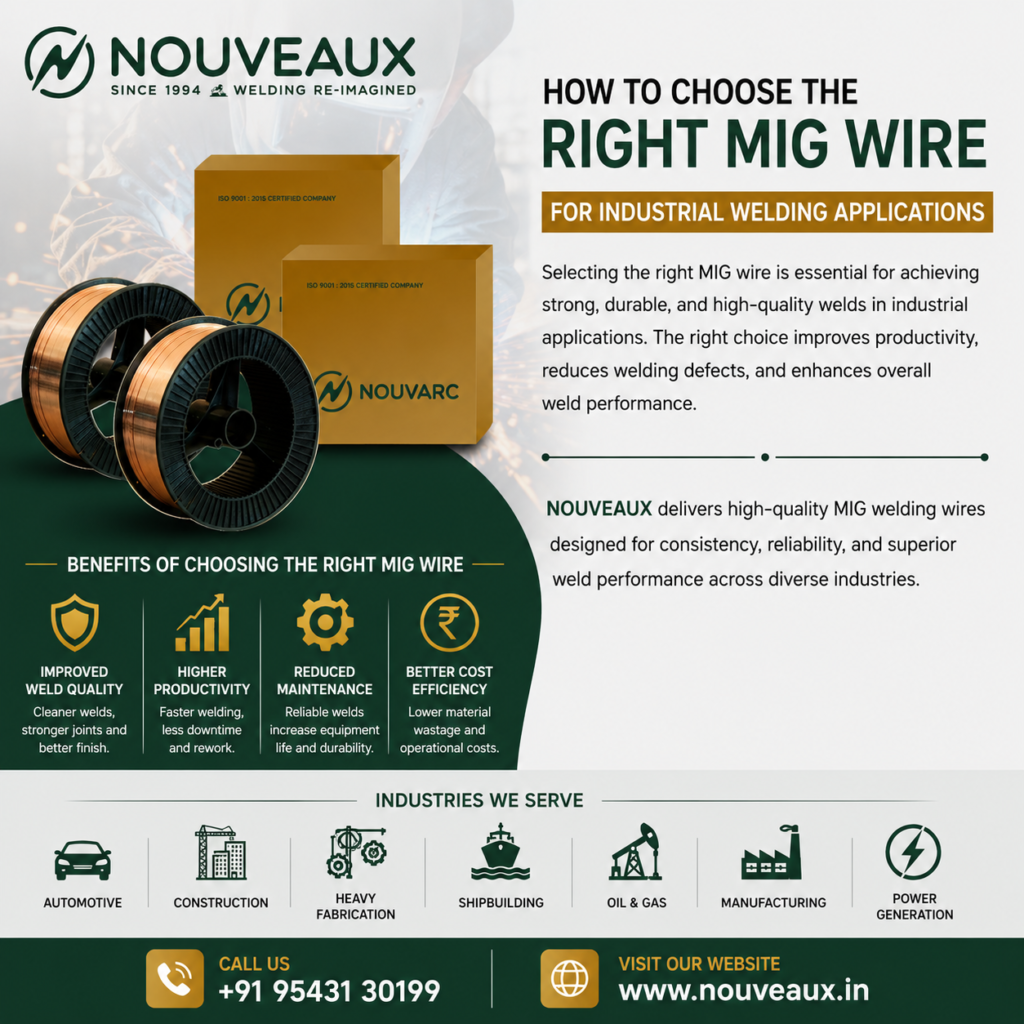
MIG welding is widely used in manufacturing, automotive, fabrication, construction, shipbuilding, and heavy engineering industries because of its speed, efficiency, and clean weld finish. Choosing the right MIG wire helps improve productivity, reduce welding defects, and enhance overall weld quality.
Understanding MIG Welding Wire
MIG (Metal Inert Gas) wire acts as the filler material during the welding process. The wire continuously feeds through the welding gun and melts to join metal components together.
A trusted MIG Wire Manufacturer offers different types of MIG wires designed for various industrial applications and metal types.
Factors to Consider When Choosing MIG Wire
1. Identify the Base Material
The first step in selecting MIG wire is understanding the type of metal being welded. Different metals require different wire compositions for strong and reliable welds.
Common materials include:
- Mild Steel
- Stainless Steel
- Nickel Alloys
- Aluminum
- High-Strength Steel
A professional MIG Wire Manufacturer provides specialized wires that match specific base materials for better weld compatibility and performance.
2. Select the Correct Wire Diameter
Wire diameter affects welding penetration, heat input, and welding speed. Smaller diameter wires are suitable for thin materials, while thicker wires work better for heavy industrial applications.
Typical wire sizes include:
- 0.8 mm
- 1.0 mm
- 1.2 mm
- 1.6 mm
Choosing the right diameter ensures smooth wire feeding and consistent weld quality.
3. Consider Shielding Gas Compatibility
MIG wires are designed to work with specific shielding gases. The shielding gas protects the weld area from contamination and improves arc stability.
Common shielding gases include:
- Argon
- CO₂
- Argon-CO₂ Mixtures
- Helium Blends
A reliable MIG Wire Manufacturer recommends suitable shielding gas combinations for optimal welding performance.
4. Evaluate Welding Position Requirements
Industrial welding often involves multiple welding positions such as flat, vertical, horizontal, and overhead welding. Certain MIG wires perform better in specific positions.
Selecting the proper wire improves weld appearance, reduces spatter, and enhances operator control.
5. Check Mechanical Strength Requirements
Different applications require different levels of weld strength and durability. Heavy-duty industrial structures require high tensile strength and crack-resistant welds.
An experienced MIG Wire Manufacturer offers welding wires engineered for superior mechanical performance and reliability in demanding conditions.
6. Assess Corrosion Resistance Needs
Industries working in harsh environments often require corrosion-resistant welds. Stainless steel and nickel alloy MIG wires provide better resistance against moisture, chemicals, and high temperatures.
Choosing the right corrosion-resistant wire helps extend equipment lifespan and reduce maintenance costs.
7. Ensure Consistent Wire Quality
Consistent wire quality is essential for smooth feeding, stable arc performance, and reduced downtime. Poor-quality MIG wires can lead to excessive spatter, porosity, and welding defects.
Partnering with a trusted MIG Wire Manufacturer ensures high-quality production standards and dependable welding performance.
Benefits of Choosing the Right MIG Wire
Improved Weld Quality
The right MIG wire delivers cleaner welds, stronger joints, and better overall appearance.
Higher Productivity
Proper wire selection improves welding speed, reduces interruptions, and minimizes rework.
Reduced Maintenance
High-quality welds increase structural reliability and reduce repair requirements.
Better Cost Efficiency
Efficient welding processes lower material wastage and operational costs.
Industries Using MIG Welding Wires
MIG welding wires are widely used in:
- Automotive Industry
- Construction and Infrastructure
- Heavy Fabrication
- Shipbuilding
- Oil and Gas Industry
- Manufacturing Plants
- Power Generation
A dependable MIG Wire Manufacturer supplies welding solutions suitable for various industrial applications.
Conclusion
Choosing the right MIG wire is essential for achieving strong, reliable, and efficient welding results in industrial applications. Factors such as base material, wire diameter, shielding gas, welding position, and corrosion resistance all play a critical role in wire selection.
Working with an experienced MIG Wire Manufacturer ensures access to high-quality welding consumables that improve productivity, weld performance, and long-term reliability. Investing in the correct MIG wire helps industries maintain superior welding standards and efficient operations.